 Skip to content
Home » Cupping Therapy
If you’re struggling with pain and looking for a hands-on approach to recovery in Kings Norton, we can help.
Cupping therapy is a hands-on treatment technique that uses specially designed cups to create controlled suction on the skin. It is commonly used alongside physiotherapy, sports therapy and other manual treatments to help relieve muscular tension, encourage movement and support recovery.
At GJP Health, cupping therapy can be incorporated into a personalised treatment plan depending on your symptoms, activity levels and individual needs.
Whether you’re dealing with tight muscles after training, recovering from an injury or experiencing ongoing muscular aches and stiffness, our experienced team can assess whether cupping may be suitable for you.
Cupping is a treatment technique in which cups are placed onto specific areas of the body and suction is created inside them. The negative pressure gently draws the skin and superficial tissues upwards into the cup.
Unlike traditional massage, where pressure is applied downwards into the muscles and soft tissues, cupping creates a lifting or decompressive effect.
This makes it a popular complementary technique within sports and manual therapy, particularly when treating areas of muscular tightness or restricted movement.
The exact placement and technique will depend upon the reason for treatment.
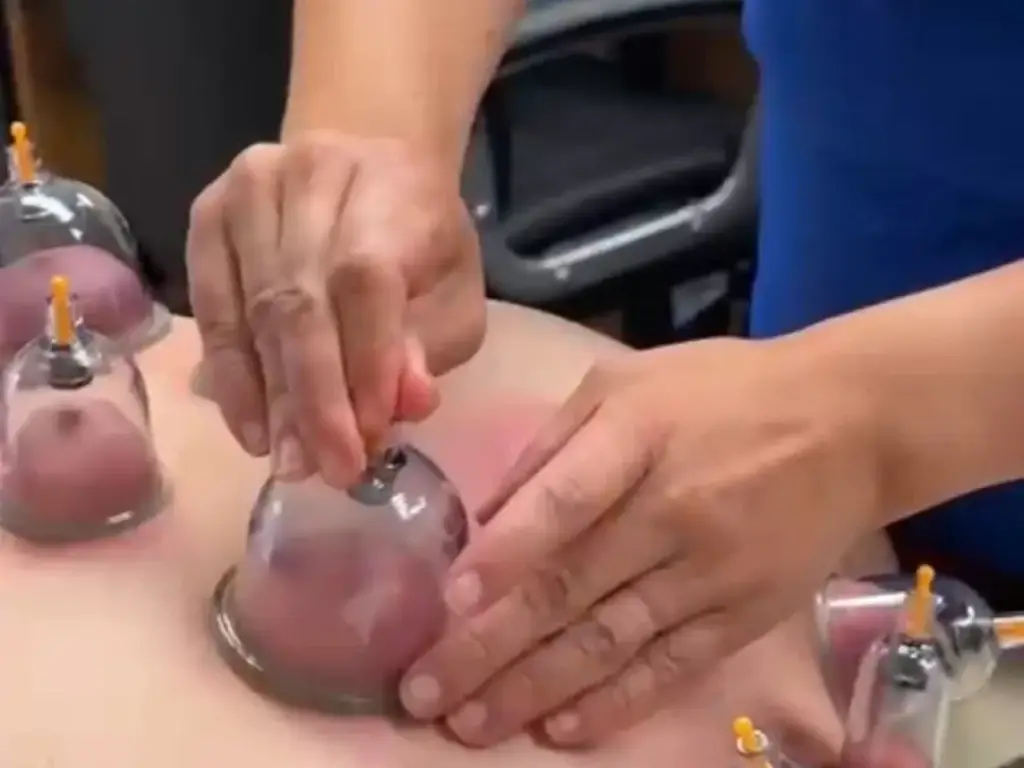

People seek cupping therapy for many different reasons. It is particularly popular with athletes, active individuals and people experiencing muscular discomfort or stiffness.
The suction created by the cups can provide a different form of soft-tissue stimulus to conventional massage and may help muscles feel less tight.
Some research suggests cupping may provide short-term relief for certain musculoskeletal pain conditions, although the evidence is still developing.
Cupping is sometimes used where muscle tightness or soft-tissue restriction is affecting comfortable movement.
Athletes often use cupping alongside massage, stretching and rehabilitation programmes to manage muscular soreness and tightness following training or competition.
The suction created during cupping draws blood towards the treated area, producing the characteristic temporary red or purple marks sometimes seen following treatment.
Many people find cupping and other forms of manual therapy relaxing, particularly when treating areas where they regularly experience muscular tension.
Cupping shouldn’t be considered a cure-all or replacement for appropriate medical treatment. At GJP Health, it can instead form part of a wider treatment or rehabilitation programme where appropriate.
Although cupping has become increasingly visible in modern sport and physical therapy, it is far from a new treatment. Forms of cupping have been practised for thousands of years, with traditions associated with China, the Middle East and other parts of the world.
Early practitioners used materials such as bamboo, ceramic and glass to create suction against the skin. The basic principle has remained remarkably similar, but modern cupping equipment allows practitioners to create and control suction much more easily.
Cupping attracted significant mainstream attention after distinctive circular cupping marks were seen on international athletes. Today, variations of the technique are used by some physiotherapists, sports therapists, massage therapists and other trained practitioners as a complementary form of treatment.
Dry Cupping
Dry cupping involves placing cups onto the skin and creating a vacuum without breaking the skin. The cups may remain stationary for several minutes and are often positioned over areas of muscular tension. This is one of the most widely used forms of cupping within musculoskeletal and sports treatment.
Massage or Moving Cupping
Rather than leaving the cup in one position, a lubricant is applied to the skin so that the practitioner can gently move the cup across the treatment area while maintaining suction. This combines the negative pressure associated with cupping with movement across the soft tissues. It is sometimes called moving, dynamic or massage cupping.
Wet Cupping / Hijama
Wet cupping – sometimes known as Hijama, differs significantly from dry cupping because small superficial incisions or punctures are made in the skin before or during treatment, allowing a small amount of blood to enter the cup.
Before treatment begins, your practitioner will discuss your symptoms, relevant medical history and what you hope to achieve from your appointment.
The area being treated will then be exposed and the cups positioned at appropriate points. A vacuum is created inside each cup, gently drawing the skin upwards. Depending on the technique being used, the cups may remain stationary or be moved across the treatment area.
You are likely to feel a pulling or tightening sensation underneath the cup. Treatment shouldn’t cause severe pain, so you should tell your practitioner if you experience significant discomfort.
One of the most recognisable effects of cupping therapy is the circular red, pink or purple marks that can appear after treatment.
These occur because suction affects the small blood vessels close to the surface of the skin. They can look similar to bruises and usually fade naturally over the following days or couple of weeks.
The colour or darkness of a cupping mark shouldn’t be used as a diagnosis of a medical condition or as evidence that ‘toxins’ have been removed from the body.
Cupping has become particularly popular within sport. Training places considerable demands on muscles and joints, and repeated exercise can leave areas feeling tight, tired or sore. Cupping may therefore be incorporated alongside sports massage, stretching, rehabilitation exercises and other manual therapy techniques.
It can be particularly relevant for people involved in running, cycling, football, rugby, gym training, weightlifting, CrossFit, racquet sports and martial arts.
You don’t need to be an elite athlete. Cupping may also be considered for recreational athletes, gym-goers and anyone experiencing muscular tension associated with an active lifestyle.
Cupping is generally considered relatively low risk when performed appropriately, but it can cause temporary side effects including skin discolouration, soreness and skin irritation.
Burns and infections are also possible, particularly with some traditional or wet-cupping techniques.
Cupping isn’t suitable for everybody. Your practitioner should discuss your medical history and any relevant contraindications before treatment.
If you’re unsure whether cupping is appropriate because of an existing medical condition, medication or pregnancy, speak to an appropriate healthcare professional before treatment.
If you’re experiencing muscle tightness, soreness, restricted movement or discomfort, cupping therapy could be considered as part of your treatment and recovery programme.
At GJP Health, we’ll assess your symptoms and discuss the most appropriate treatment options rather than taking a one-size-fits-all approach.
Whether you’re recovering from training, managing an ongoing problem or simply looking to keep your body moving comfortably, we’re here to help.
Cupping shouldn’t normally be painful, although the suction can feel unusual or quite tight. The intensity can be adjusted depending on the technique and your comfort level.
The suction affects tiny blood vessels beneath the skin, which can produce temporary circular discolouration. These marks normally fade naturally.
This varies from person to person. They may disappear within several days but can sometimes remain visible for a week or two.
Wear comfortable clothing. Your practitioner will need access to the area being treated, so sportswear or loose-fitting clothing is usually ideal.
There is evidence suggesting cupping may provide short-term pain relief for some musculoskeletal conditions, although research quality varies and more high-quality studies are needed.
Some research into dry cupping has reported improvements in range of motion, but evidence remains limited. Your practitioner can advise whether cupping could be useful alongside stretching, exercise or rehabilitation.
No. Although cupping has become highly visible within professional sport, treatment isn’t limited to athletes. It may be considered for anyone experiencing appropriate musculoskeletal symptoms.
There isn’t a set number. It depends on your symptoms, treatment goals and how you respond. Your practitioner can recommend an appropriate approach following assessment.
Yes. Cupping is commonly used as a complementary technique rather than a standalone treatment. At GJP Health, it can be incorporated into a wider treatment or rehabilitation programme when appropriate.
Dry cupping creates suction without breaking the skin. Wet cupping involves making small superficial punctures or incisions so that blood enters the cup.
There isn’t good scientific evidence that cupping physically removes ‘toxins’ from the body. It is better understood as a complementary manual treatment that creates suction and mechanical effects on the skin and underlying tissues.

Please let us know a few details below and we will get back to you to confirm a date and time.
 BannerText_Seraphinite Accelerator
